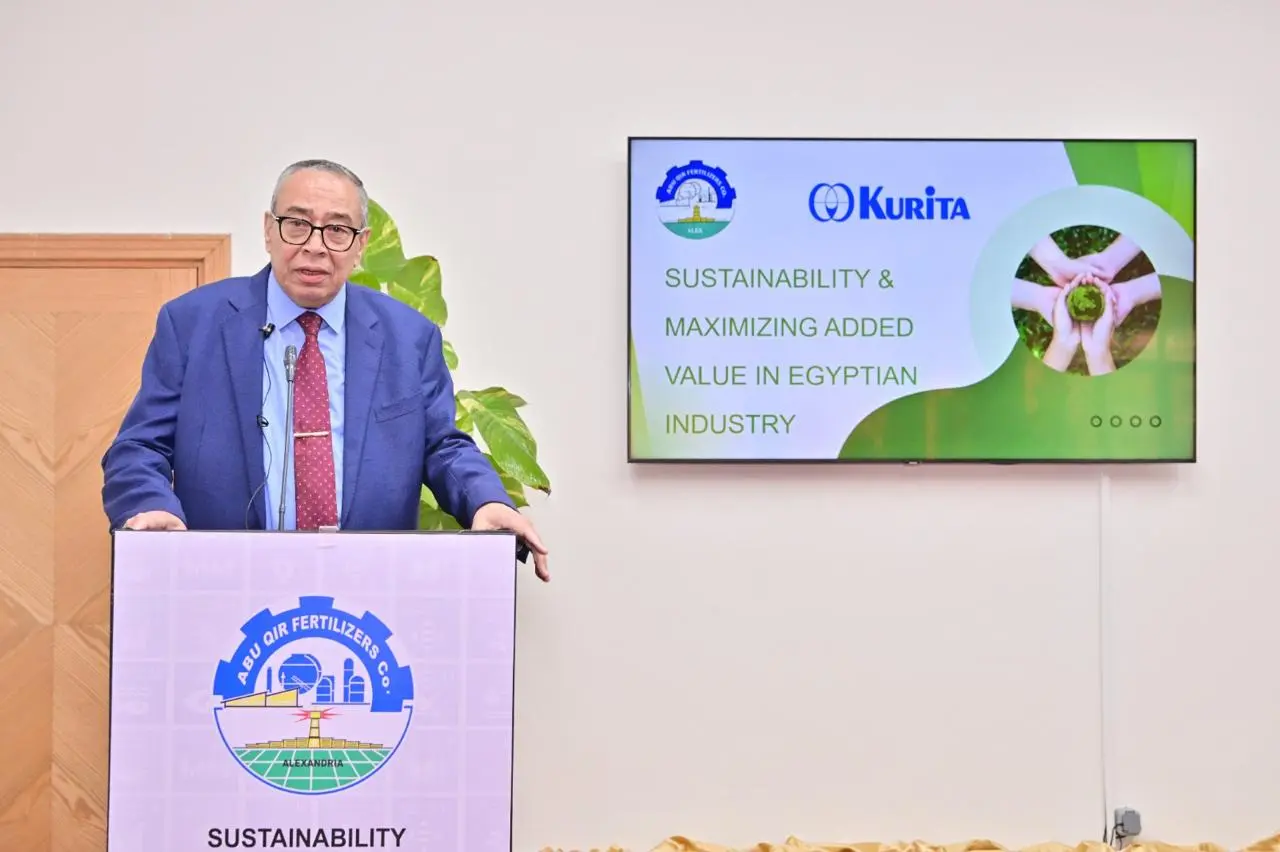
Abu Qir Fertilizers and Chemical Industries Company, in cooperation with Kurita Japan, organized a workshop entitled “Sustainability and Maximizing Added Value in Egyptian Industry” at the Company’s Social Club.
The workshop was attended by Eng. Hany Dahy, Chairman and Managing Director of Abu Qir Fertilizers and Chemical Industries; Dr. Hussein Al-Atfy, Secretary General of the Arab Water Council and former Minister of Water Resources and Irrigation; Dr. Abdel Aziz Konsowa, President of Alexandria University; Eng. Hassan Abdel Aleem, Chairman of Helwan Fertilizers Company; Alaa El-Banna, Chairman of Alexandria Fertilizers Company; Eng. Hossam Asaad, Chairman of EPROM; Eng. Ahmed Mowakea, Chairman of the Egyptian Petrochemicals Company; Eng. Reham El-Alfy, Chairman of Alexandria Petroleum Company; and Dr. Eng. Hisham Saudi, Head of the Engineers Syndicate of Alexandria.
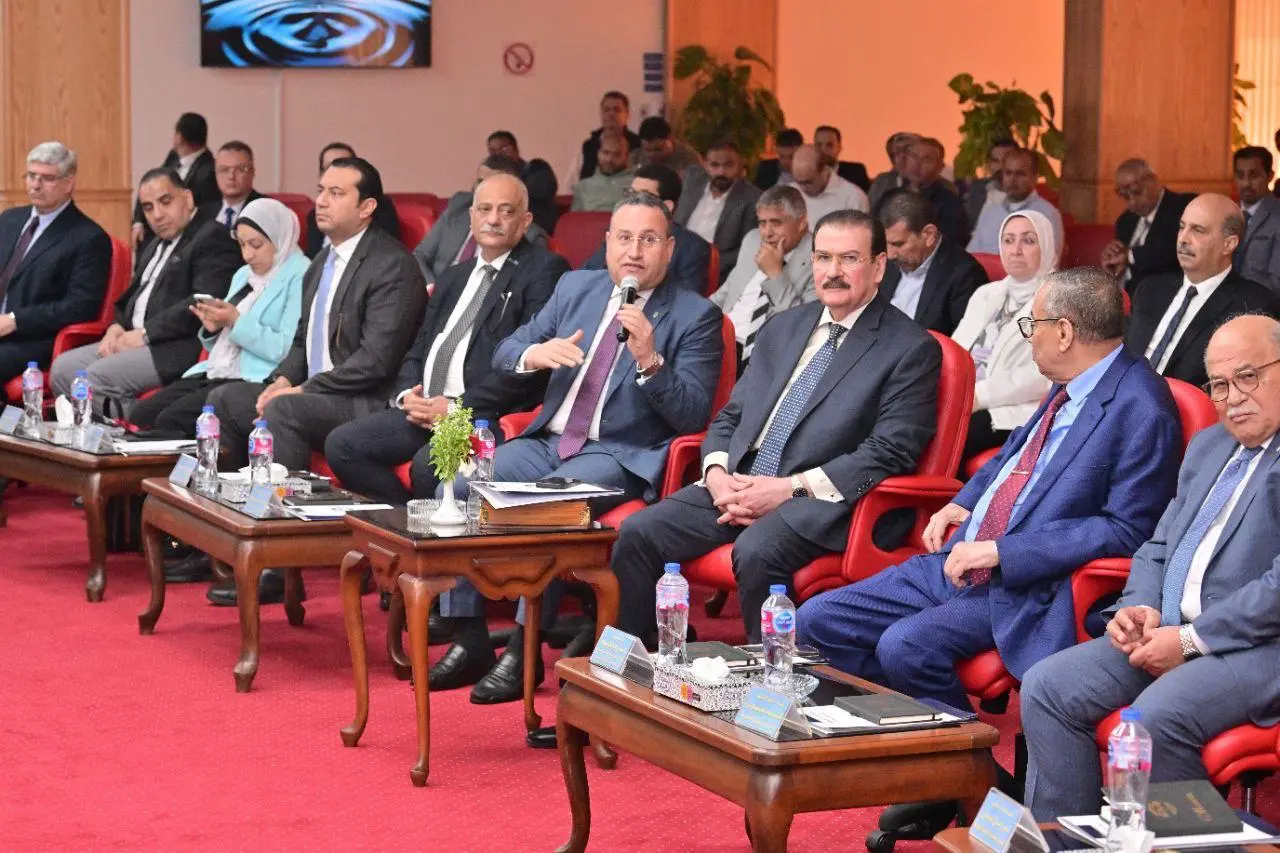
The event was also attended by a distinguished group of university presidents and academics representing Alexandria University, Pharos University, the Egyptian Japanese University of Science and Technology, and the Arab Academy for Science, Technology and Maritime Transport, in addition to deans and professors of various faculties. Senior executives from petroleum companies, sister companies, and representatives of the Egyptian Environmental Affairs Agency in Cairo and Alexandria were also present.
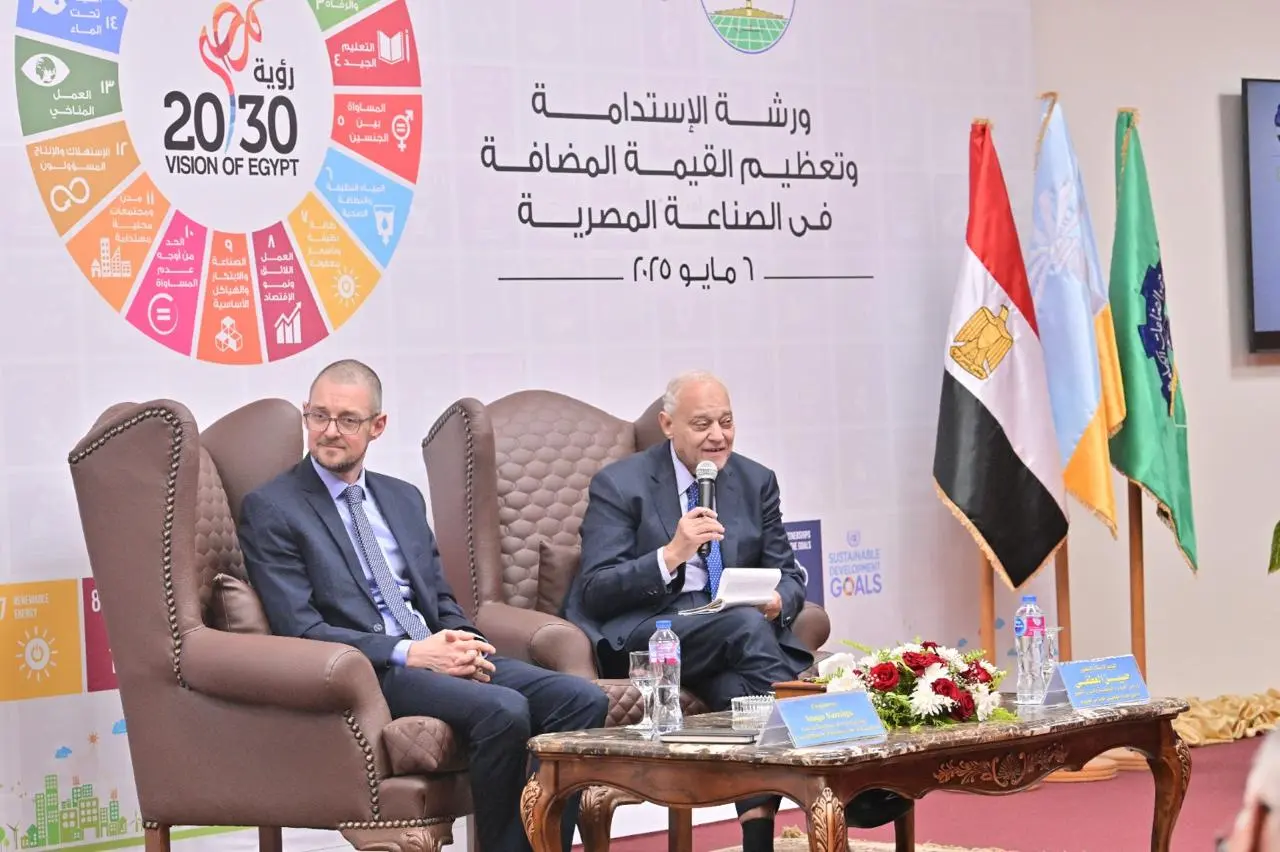
The workshop witnessed broad participation from research institutions, relevant authorities, major industrial companies, university professors and students, and sustainability specialists. Attendance exceeded expectations, highlighting the workshop’s importance as a key platform for knowledge exchange, experience sharing, and exploring mechanisms for developing and applying environmental practices in the industrial sector—particularly the fertilizer industry—in support of sustainable development goals.
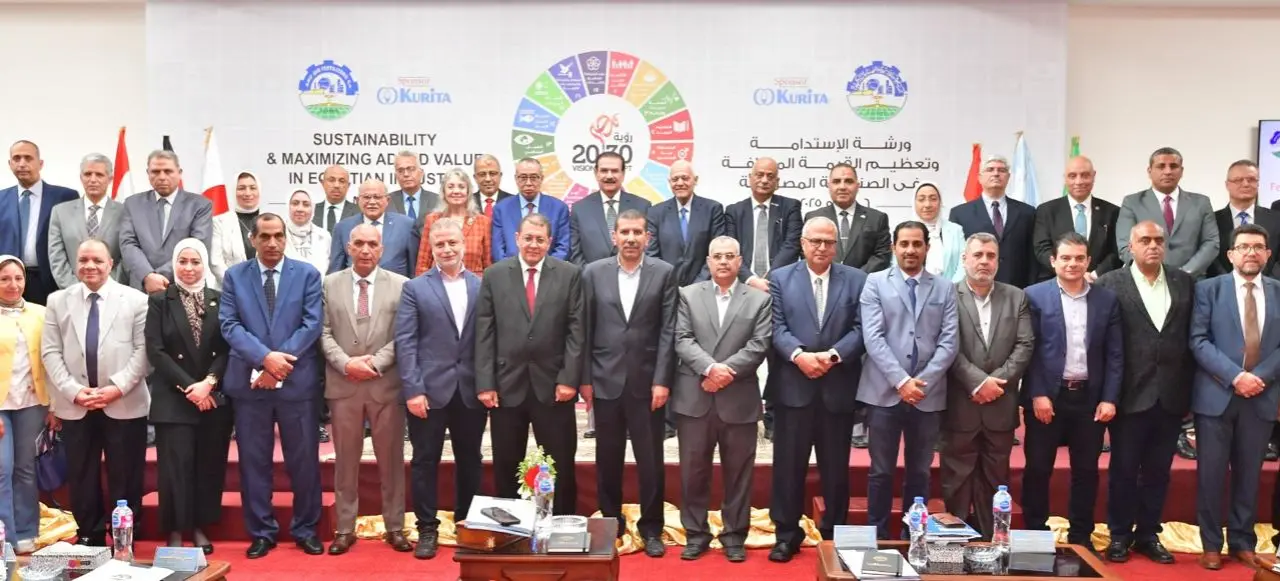
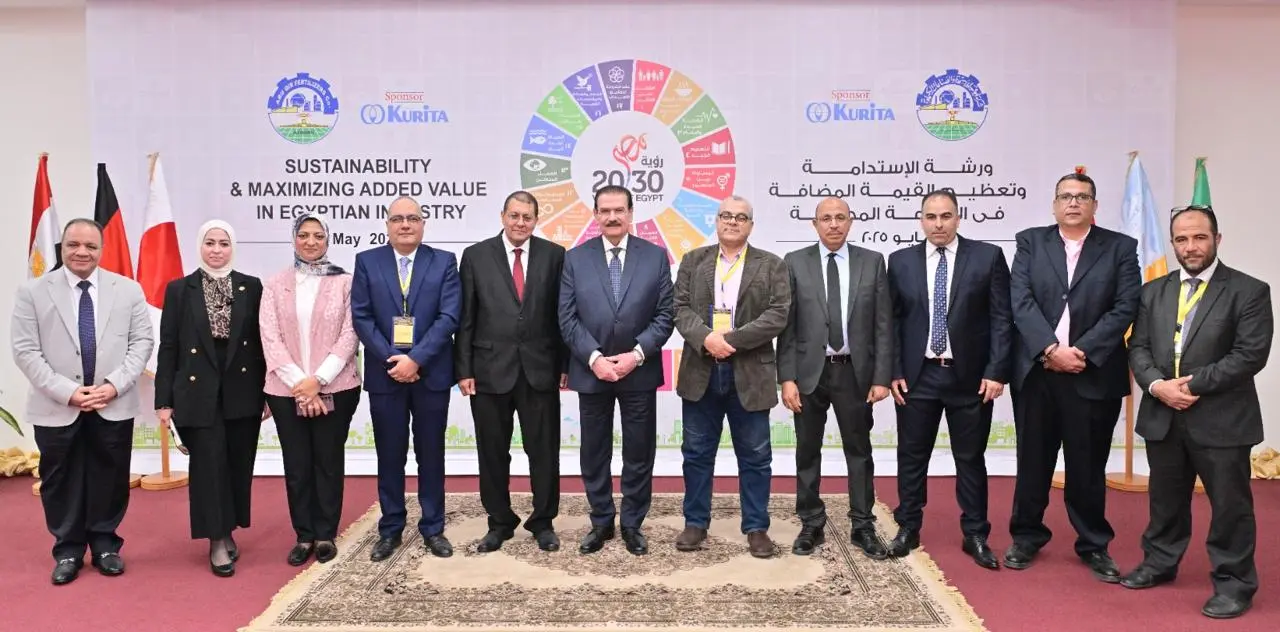
The workshop commenced with opening remarks by Eng. Hany Dahy, who welcomed attendees and paid tribute to the late Eng. Abed Ezz El-Regal, former Chairman and Managing Director of the Company, who passed away in February of this year. He extended condolences to his family and to the fertilizer and petroleum sectors in Egypt. A moment of silence was observed in his honor, followed by the recitation of Al-Fatiha.
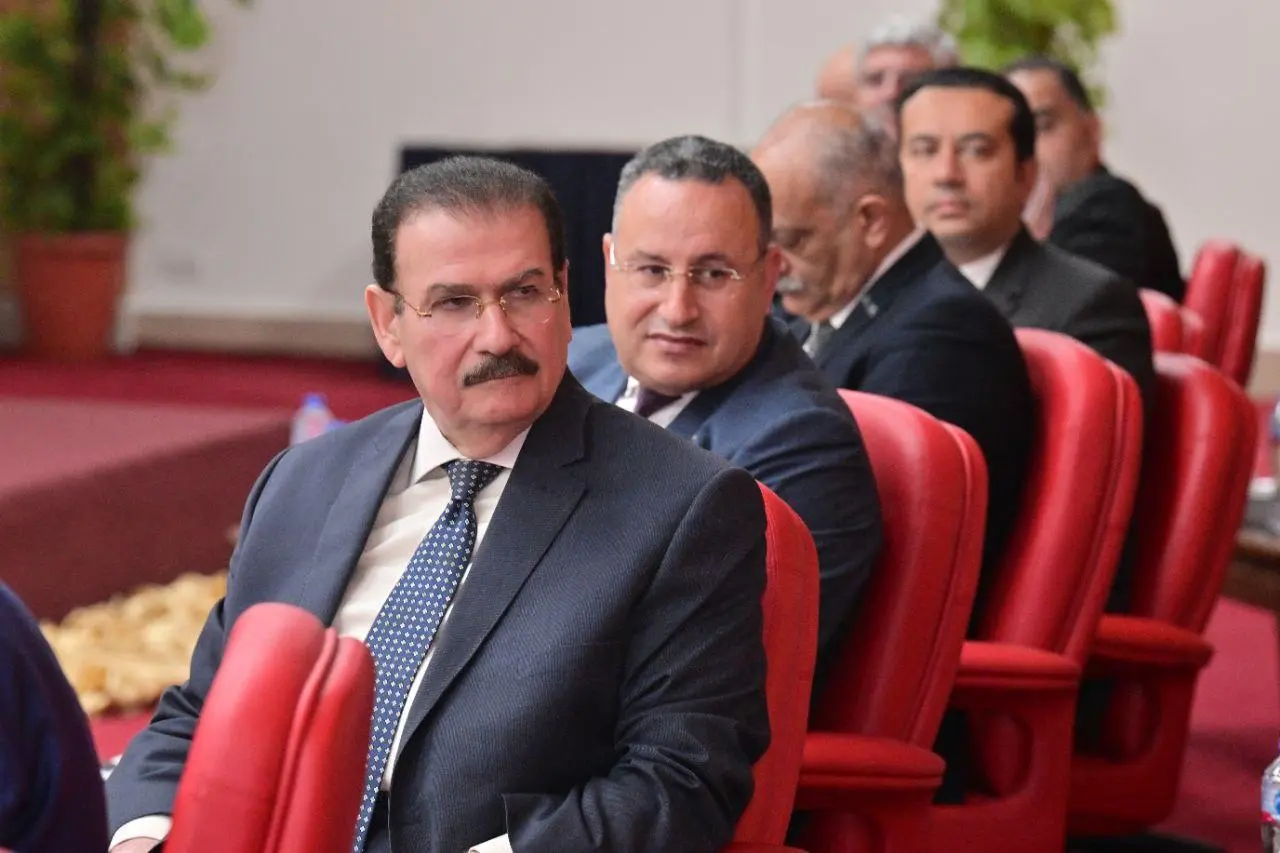
Eng. Dahy stated:
“I was keen for this workshop to be held in commemoration of the noble memory of my brother, colleague, and friend, Eng. Abed Ezz El-Regal, former Chairman and Managing Director of the Company, as a tribute to his great efforts in this field and throughout his distinguished career. He was generous in giving, sincere in his work, of noble character, kind in speech, a lover of goodness and a source of it, and a friend to all.”
He added that words of tribute and gratitude fall short of doing justice to such a distinguished figure, praying for God’s mercy upon him and patience for his family.
Eng. Dahy then reviewed Abu Qir Fertilizers’ sustainability strategy, highlighting the Company’s significant achievements through the implementation of successful sustainability projects aligned with Egypt’s Sustainable Development Strategy (Egypt Vision 2030). These initiatives represent a unique model for applying the four pillars of sustainable development and the green transition.
Sustainability Pillars
Human Development Pillar:
The Company places strong emphasis on human capital as a core driver of success through professional development programs, workforce qualification, leadership and technological transformation training, continuous safety and occupational health programs, and empowerment of young talent. Abu Qir Fertilizers also promotes gender equality and women’s representation in the workforce, recognizing diversity and inclusion as essential to sustainable and inclusive growth.
Environmental Pillar:
Environmental protection is integrated into daily operations through sustainable policies aimed at reducing fuel, electricity, water, and paper consumption, minimizing emissions, and managing waste.
Key initiatives include the implementation of Egypt’s largest Zero Liquid Discharge (ZLD) industrial wastewater treatment and reuse project, with a capacity of 550 m³/hour, reducing carbon emissions by approximately 53,000 tons of CO₂ annually, with a second phase underway.
The Company also launched its first solar energy project with a capacity of 117 kW, reducing electricity costs by approximately EGP 250,000 annually and cutting CO₂ emissions by 175 tons per year. Expansion plans are underway, including the installation of 2.65 MW in the first phase and 2.5–3 MW in the second phase of solar power projects, as part of Abu Qir’s clean energy transition and preparation for compliance with CBAM requirements.
Additional initiatives include CO₂ recovery and liquefaction plants, nitrous oxide (N₂O) abatement projects, participation in carbon credit markets, and efforts to partially replace natural gas with green hydrogen to increase ammonia production capacity and reduce emissions. The Company also holds a 45% stake in Abu Qir Bay for Agricultural Nutrients, which will rely on green hydrogen to produce green ammonia, marking a strategic milestone toward sustainable fertilizer production.
Community Pillar:
Abu Qir Fertilizers is a leader in creating shared value through community investment, leveraging financial and human resources to support sustainable social, environmental, and economic development in surrounding communities.
Economic Pillar:
Eng. Dahy emphasized that investments in sustainability—whether in clean energy, green projects, human capital, or community initiatives—generate not only environmental and social benefits but also significant economic returns that support the Company’s future growth.
Workshop Sessions
The workshop included two main sessions focused on sustainability strategies to maximize added value in Egyptian industry, moderated by Dr. Hussein Al-Atfy, who stressed the importance of integration between academia, industry, and commerce to achieve sustainable development goals. He highlighted Abu Qir Fertilizers’ pioneering role in raising awareness of sustainability in industrial operations and noted the value of the Company’s membership in the Arab Water Council’s Board of Governors, comprising representatives from 22 Arab countries.
Mr. Mojahed El-Sabbagh, Head of Utilities Sectors at Abu Qir Fertilizers and General Coordinator of the workshop, presented the Company’s sustainability activities and highlighted its annual conference on water treatment technologies.
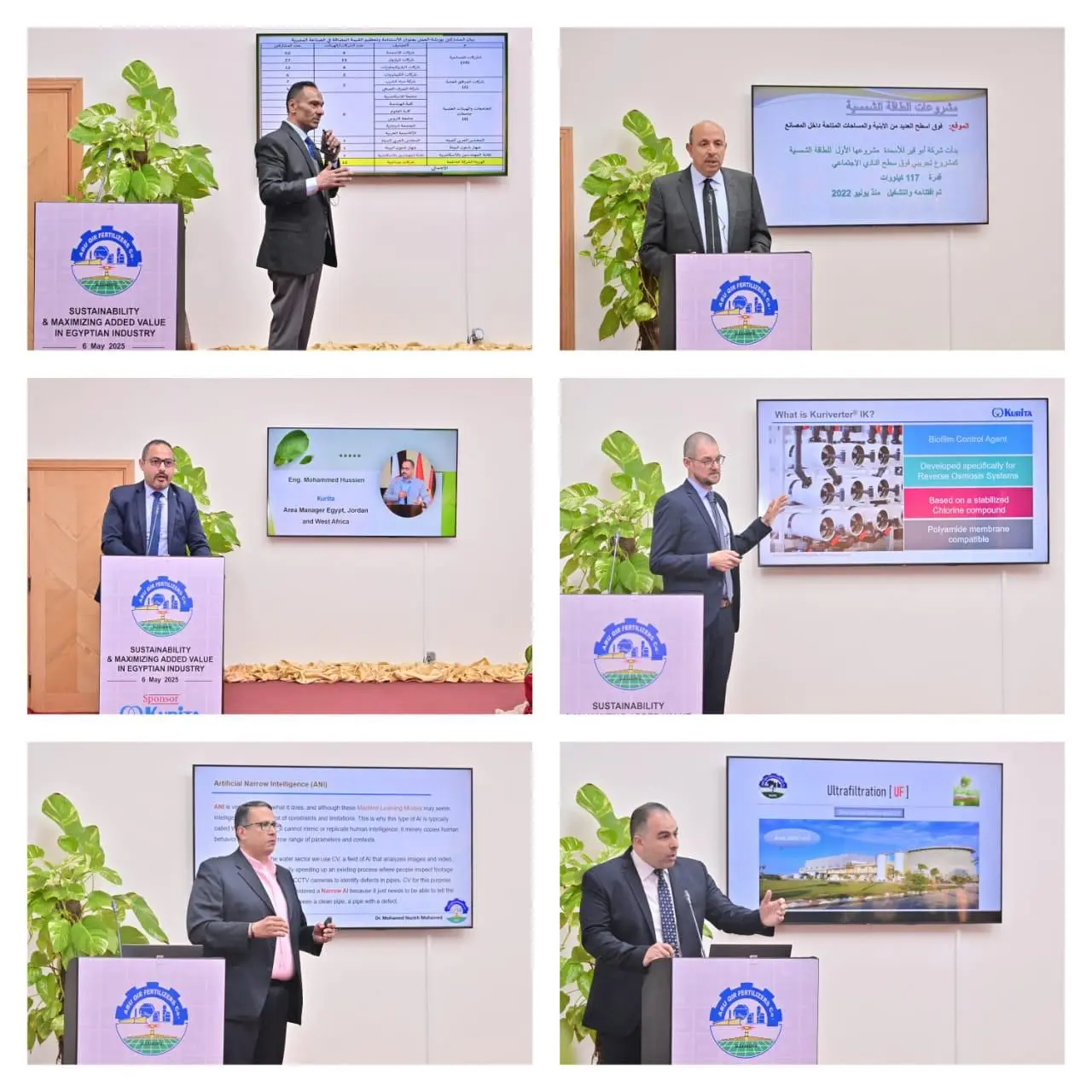
Technical presentations included:
- Kuriverter IK Technology by Kurita Egypt, addressing biofouling control in RO systems and energy reduction.
- Renewable energy projects at Abu Qir Fertilizers as a pathway toward green ammonia.
- Dilurit BCS Technology as a safer alternative to chlorine in cooling water systems.
- Applications of artificial intelligence in optimizing industrial water systems.
- Cetamine Technology for comprehensive boiler corrosion protection and reduced fuel and water consumption.
- Abu Qir Fertilizers’ leading experience in operating Egypt’s largest industrial wastewater treatment and reuse (ZLD) facility.
Recommendations
The workshop concluded with recommendations to organize joint workshops between Abu Qir Fertilizers and universities and research institutions—led by Alexandria University, the Egyptian Japanese University, Pharos University, and the Arab Academy for Science and Technology—to transform research into practical industrial applications, particularly in:
- AI applications in water and wastewater treatment
- Green economy, green hydrogen, and green ammonia
- Advanced UF & RO technologies for water and energy efficiency
- Human capacity building for digital transformation, AI, and green economy
Eng. Hany Dahy invited all participating companies to contribute scientific and technical case studies, share lessons learned, and collaborate in knowledge transfer related to artificial intelligence, modern technologies, and sustainability in industry.