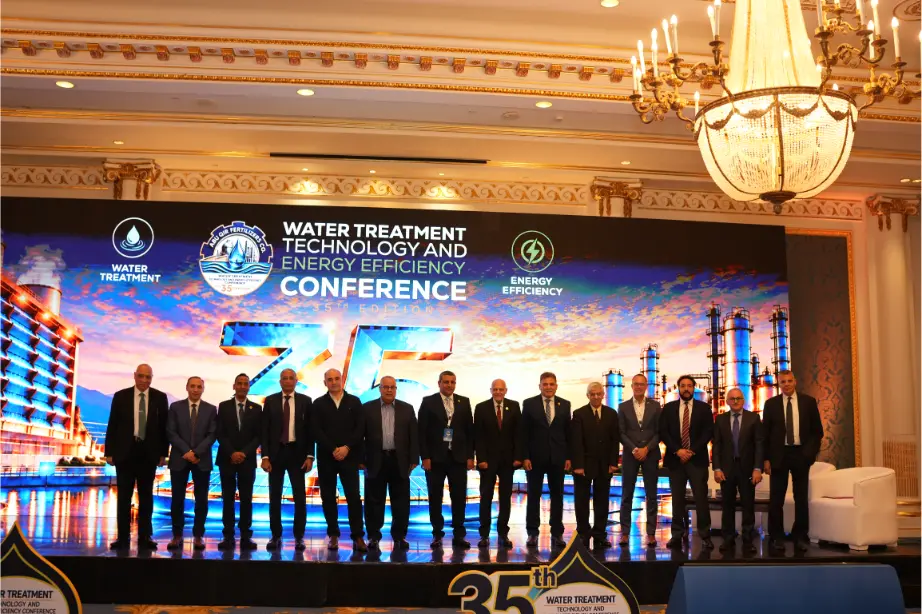
35th Annual Water Treatment Technology Conference on 10-12 November 2026 in FOUR SEASONS HOTEL, San Stefano , Alexandria, Egypt.
Dear Sirs and Professors,
Abu Qir fertilizers Co.
is holding its 35th.Water Treatment Technology Conference in NOV 2026 at FOUR SEASONS HOTEL, San Stefano, Alexandria, Egypt.
It is our pleasure to invite your university, institute and company to participate in the conference through a presentation or a case study related to the following topics:
-
-
- Advanced Water Treatment & Process Intensification.
- Energy-Efficient Desalination & Membrane Technologies.
- Ion Exchange, Boiler & Cooling Water Treatment: Operation and Troubleshooting.
- Industrial Wastewater Treatment, Water Reuse & Zero Liquid Discharge.
- Renewable Energy Integration in Water Treatment & Desalination.
- Water-Energy Nexus & Energy Optimization in Industrial Water Systems.
- Energy Recovery from Water & Wastewater Treatment Processes.
- Solar & Wind Powered Desalination and Water Treatment.
- Green Hydrogen, Green Ammonia & Sustainable Water Management.
- High-Efficiency Pumps, Motors & Process Equipment.
- Smart Energy Management, AI & Digital Monitoring.
- Resource Recovery, Circular Water Economy & Low-Carbon Treatment.
- Decarbonization, Climate Resilience & Sustainable Industrial Development.
-
Chairman & Coordinator Messages
Lorem ipsum dolor sit amet, consectetur adipiscing elit, sed do eiusmod tempor incididunt ut labore et dolore magna aliqua. Ut enim ad minim veniam, quis nostrud exercitation ullamco laboris nisi ut aliquip ex ea commodo consequat. Duis aute irure dolor in reprehenderit in voluptate velit esse cillum dolore eu fugiat nulla pariatur. Excepteur sint occaecat cupidatat non proident, sunt in culpa qui officia deserunt mollit anim id est laborum.
Lorem ipsum dolor sit amet, consectetur adipiscing elit, sed do eiusmod tempor incididunt ut labore et dolore magna aliqua. Ut enim ad minim veniam, quis nostrud exercitation ullamco laboris nisi ut aliquip ex ea commodo consequat. Duis aute irure dolor in reprehenderit in voluptate velit esse cillum dolore eu fugiat nulla pariatur. Excepteur sint occaecat cupidatat non proident, sunt in culpa qui officia deserunt mollit anim id est laborum.
Exhibitors
VEOLIA
WATERMARK
WETCO
XTREMBLUE
ABB
HAMCO

KIMA
MASKOUB
NALCO
PETROJRT
PETROMAINT
PYRAMID
REDA
SOUL WATER

TAYPLAST
TECHNO MASTER
Committee Members
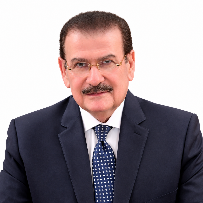
H.E. Eng. Hany Dahi
Chairman & Managing Director of Abu Qir Fertilizers Company, Head of Scientific Committee & Conference Chairman
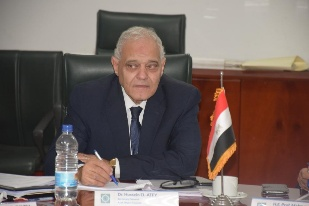
H.E. Prof. Dr. Hussein El-Atfy
Former Minister of Water Resources & Irrigation, Secretary General of Arab Water Council & Executive President of Scientific Committee
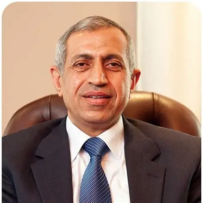
Prof. Dr. Ismail Abdel Ghafar
President of Arab Academy for Science, Technology

Prof. Dr. Wael Mohamed El-Maghlany
Dean of Faculty of Engineering, Alexandria University
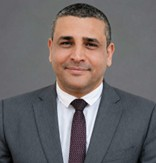
Prof. Dr. Mohamed Essam Hagar
Dean of Faculty of Science, Alexandria University

Prof. Dr. Akram Soliman
Dean of College of Engineering and Technology, Arab Academy for Science, Technology and Maritime Transport
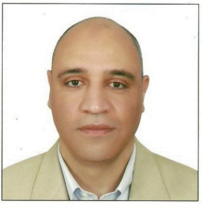
Prof. Dr. Ibrahim Hassan Mohamed
Head of Chemical & Petrochemical Engineering Dept., Arab Academy for Science and Technology

Prof. Dr. Ahmed El-Shazly
Vice President of Egypt-Japan University of Science and Technology for Education and Academic Affairs

Prof. Dr. Sameh Nada
Dean of School of Energy Resources, Environment and Chemical Engineering, E-JUST
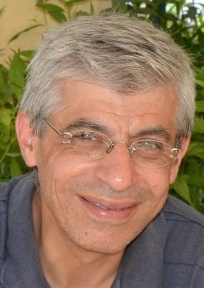
Prof. Dr. Ahmed Osman Ageeza
Professor of Biotechnology Dept., Faculty of Basic and Applied Sciences, E-JUST

Eng. Sayed El-Rawy
Chairman & Managing Director of ANRPC

Chemist Hesham Riad
Chairman & Managing Director of ETHYDCO
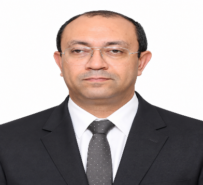
Eng. Ahmed Mahmoud El-Sayed
Former Chairman & Managing Director of MOPCO

Dr. Mohamed Zamel
Director of Technology & Sustainability, AlexFert

Chemist Mogahed Mohamed El-Sabbagh
Head of Utilities Sectors, Abu Qir Fertilizers Company
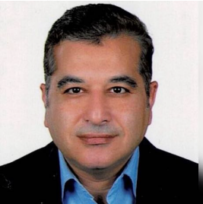
Eng. Hany Ahmed Gomaa
Sector Head in Utilities Sectors, Abu Qir Fertilizers Company

Prof. Dr. Mohamed El-Khouly
Head of Chemistry Department
Speakers
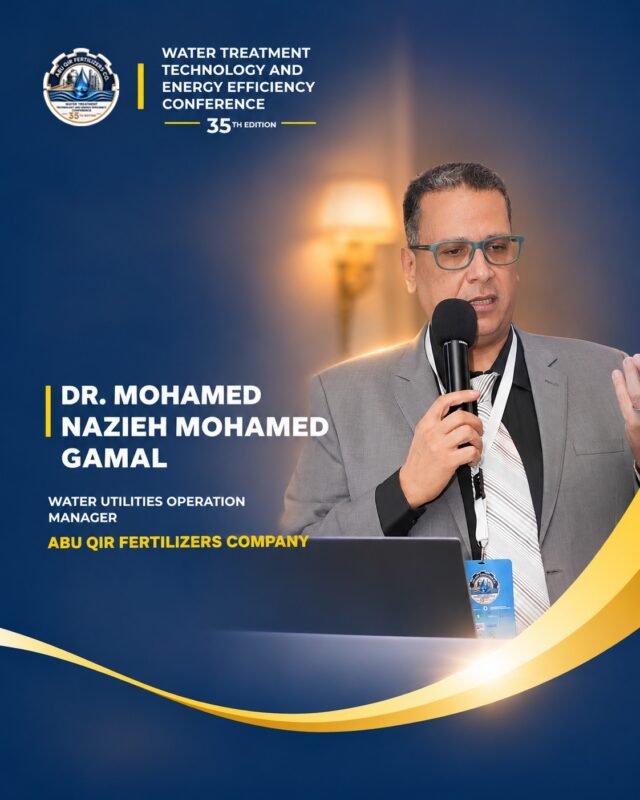
Click on the image to view more
Dr. Mohamed Nazieh Mohamed Gamal
Topic:
Intelligent Cooling Water Chemistry for Energy Efficiency – From Grab Samples to Digital Twins.
Abstract:
Cooling water chemistry influences the thermal performance, energy efficiency, and reliability of cooling towers, heat exchangers, and condensers. Fouling-deposits arising from mineral scaling, bioflm growth, suspended solids, and corrosion products-can impair heat transfer and increase energy demand. This report traces the progression from grab sampling and saturation indices through tagged chemistry, online analyzers, and fouling monitors to predictive digital twins. It highlights the limitations of bulk water assessment and the need to distinguist chemical feed verification from effective fouling control, Digital twins that integrate chemical speciation and precipitation kinetics with thermal and hydraulic models can evaluate scaling risk at heat-transfer surfaces and assess operating scenarios before changes are implemented. Thelr reliability depends on accurate plant measurements, continuous model calibration, normafization for operating conditions, and validation against observed fouling and cleaning responses. Practical applications incude chemical dosing., blowdown managemert, selection of cycles of concentration, and cleaning schedules. Linking chemistry control to measured theral performance supports decisions that balance energy efficiency, water use, chemical consumption, and equipment reliability across industrial cooling systems
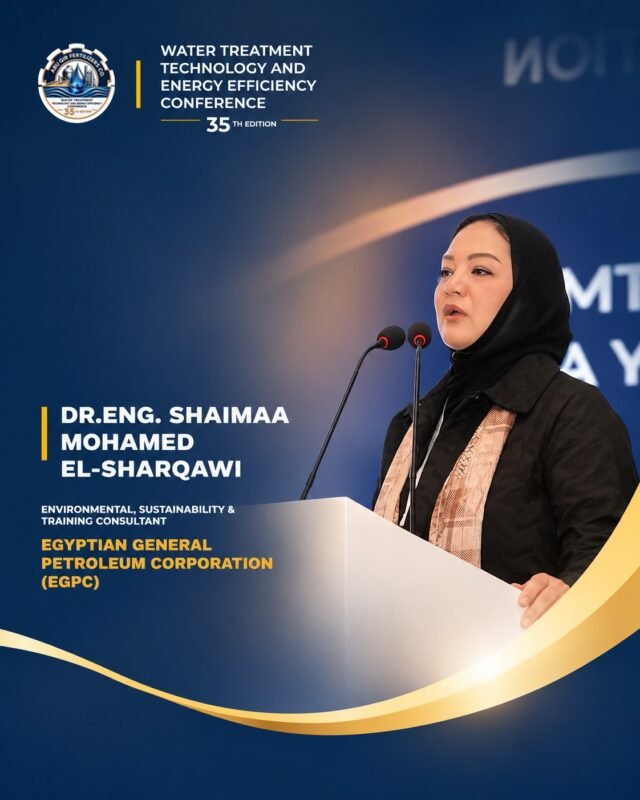
Click on the image to view more
Dr.Eng, Shaimaa Mohamed Elsharqawi
Topic:
From Carbon Footprint Measurement to Low-Carbon Industrial Transformation: Opportunities and Challenges for Fertilizer, Oil, and Petrochemical Companies.
Abstract:
Energy- and resource-intensive industries, particularly the fertilizer, oil, and petrochemical sectors, are undergoing a rapid transition toward more efficient and lower-carbon production models. This transition is driven by evolving environmental regulations, increasing market expectations, investor requirements, and the growing importance of sustainability and climate-related performance. In this context, carbon footprint is no longer merely an environmental performance indicator; it has become a strategic tool for informed decision-making, identifying efficiency opportunities, and strengthening industrial competitiveness.
This paper explores the shift from simply measuring carbon footprints toward a broader approach to low-carbon industrial transformation. It highlights the major sources of greenhouse gas emissions across carbon-intensive industries and examines the importance of establishing an integrated approach to emissions management, using carbon footprint data to prioritize emission-reduction initiatives and improve energy and resource efficiency.
The paper also addresses the interconnected relationship between carbon, energy, and water, emphasizing the importance of this nexus in achieving sustainable industrial transformation. Particular attention is given to water treatment, water reuse, resource efficiency, and circular economy practices as potential pathways for reducing environmental impacts while enhancing operational efficiency.
Furthermore, the paper explores the opportunities created by the low-carbon transition, including operational cost reduction, improved resource efficiency, stronger ESG performance, sustainable innovation, the development of more sustainable products and business models, and improved readiness for emerging market requirements and the transition toward a low-carbon economy.
The paper concludes that carbon footprint reduction should not be viewed solely as an environmental obligation, but as a strategic pathway for transforming emission and resource-efficiency challenges into opportunities for innovation, investment, sustainable growth, and enhanced industrial competitiveness.
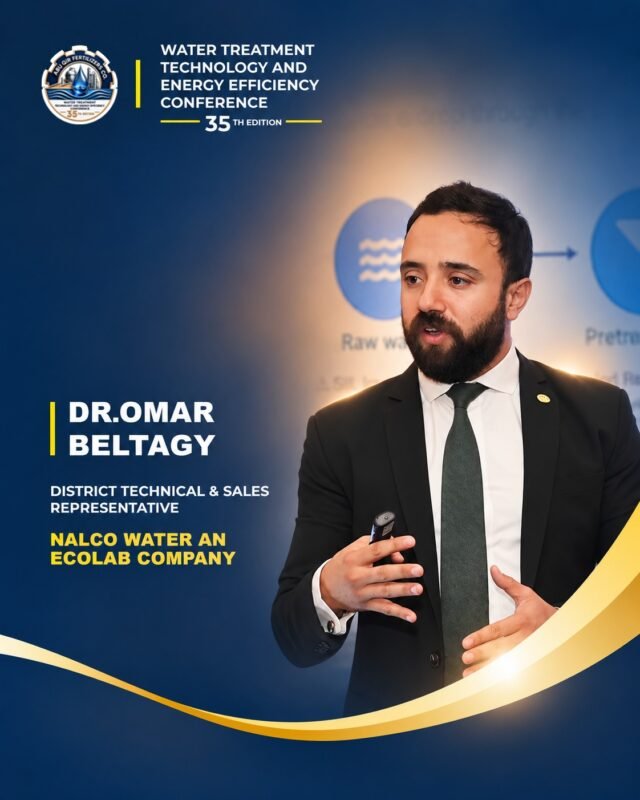
Click on the image to view more
Dr. Omar Beltagy
Topic:
Water Circularity and Wastewater Recycling to Minimise the Industrial Water Footprint.
Abstract:
THE TOP LINE Water is a finite resource, and its real price is far higher than the water bill. Nalco Water’s full-circle approach—engineered recovery, chemistry, digital control and service under outcome-based models—turns blowdown and effluent into a reliable water source, cutting discharge by 70% and delivering €1.5 million a year at a steel plant.
THE BUSINESS CHALLENGE Every product has a water footprint, yet only 11% of treated wastewater is reused. The water bill and discharge tax hide larger costs: operations, regulation, reputation, product and effluent quality, and availability. Ecolab’s Water Risk Monetizer (Smart Water Navigator, developed with Microsoft and Trucost) prices these risks.
FROM LINEAR TO CIRCULAR: A FULL-CIRCLE APPROACH
-
Linear to circular — Circular strategies manage water across pretreatment, boiler, cooling, process and effluent and return it to use, improving resiliency, product quality and profitability.
-
Start with cooling — Industry in IMEA uses 243 billion m³ of water a year (40% of withdrawals); about 70% goes to cooling, and 80–90% of installations use evaporative cooling.
-
Cooling Tower Circularity — A semi-standard membrane recovery system; PURATE™, non-P/low-P and membrane chemistries; 3D TRASAR™ for Cooling Water Premium Plus and for Membranes, ECOLAB3D™ and a patented deposit sensor; guaranteed performance, 100,000 connected systems.
RECOVERING 70% OF BLOWDOWN: FEASIBLE, BUT NOT TRIVIAL
PROVEN VALUE Calculator: 100 m³/h make-up, 30 m³/h blowdown, 70% recovery, 7,920 h/yr. Steel and glass: Nalco Water projects.€1.5M / yr (steel plant, river-to-river) | Water circularity in steel: a turnkey 150 m³/h effluent recycle system with full 3D TRASAR™ automation and specialty chemical services, under a 10-year contract guaranteeing water availability, volume, quality and effluent quality.
WHAT THE AUDIENCE WILL TAKE AWAY How to price true water risk, why blowdown is the first stream to recover, how digitally controlled membrane recovery works, and how outcome-based contracts de-risk investment for Egyptian fertilizer plants, where each tonne of ammonia needs about 12 m³ of water.

Click on the image to view more
Dr. Mohamed Swidan
Topic:
Water Desalination Strategy: From Scarcity to Water Security.
Abstract:
Water scarcity is one of the most critical challenges facing Egypt and the MENA region, driven by population growth, climate change, and limited renewable water resources. This presentation explores desalination as a strategic pillar for achieving national water security. It covers the current water gap, the evolution of desalination technologies, economic and environmental considerations, and Egypt’s 2050 Desalination Strategy.
A key focus is the strategic benefit of localizing the manufacturing of desalination needs and equipment—including membranes, pumps, energy recovery devices, chemicals, and spare parts. Localization will significantly reduce CAPEX and OPEX, lower the Levelized Cost of Water, ensure supply chain security, create high-value industrial jobs, foster technology transfer, and build a sustainable local ecosystem that accelerates the scale-up of desalination.
The goal is to present a sustainable, cost-effective, energy-integrated, and industrially localized roadmap that transforms seawater from an untapped resource into a reliable source for domestic, industrial, and agricultural use, ensuring long-term water security and economic sovereignty.
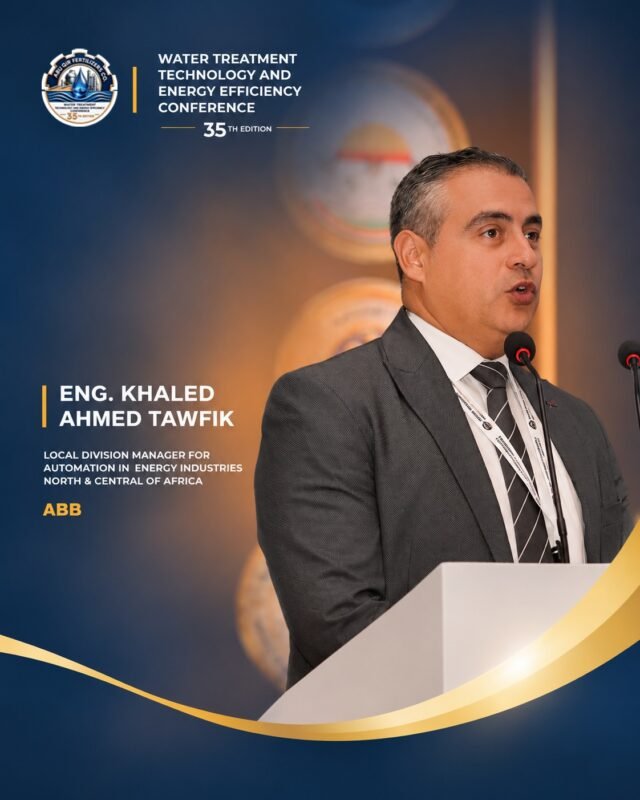
Click on the image to view more
Eng. Khaled Ahmed Tawfik
Topic:
ABB’s Integrated Technology Approach to Water, Energy, and Green Hydrogen
Abstract:
Industrial water treatment, energy management, and green hydrogen production depend on the coordinated control of water quality, energy use, emissions, and asset reliability. This lecture presents ABB’s integrated approach to the water–energy–hydrogen nexus, connecting measurement, electrification, motion, automation, and digital optimization within a common operational framework.
Measurement and Analytics solutions monitor flow, pressure, level, temperature, water quality, and gas composition, helping establish operating baselines and verify performance. Electrification covers power distribution, protection, power quality, and conversion for water-treatment facilities and electrolysis. High-efficiency motors and variable-speed drives, including ACQ580 and ACS880, can match pumping and aeration output to process demand.
ABB Ability System 800xA integrates process control, electrical control, power management, and safety functions within a unified operator and engineering environment. Safety functions are designed to meet project-specific independence and safety-integrity requirements. Relevant standards and frameworks may include IEC 61508 and IEC 61511 for functional safety, IEC 61850 for electrical and substation automation, IEC 62443 for industrial cybersecurity, and ISO 50001 and ISO 14001 for energy and environmental management. Applicability depends on project scope, plant design, and customer requirements.
ABB Ability OPTIMAX supports coordinated electricity and utility optimization. Applications include desalination, boiler and cooling-water systems, wastewater reuse, electrolyzer feedwater preparation, and hydrogen balance-of-plant operations. For green hydrogen projects, ABB’s enabling scope can include renewable-power integration, rectification, instrumentation, and control; electrolyzer stacks remain within specialist manufacturers’ scope.
Performance can be evaluated against documented baselines using indicators such as specific energy consumption, freshwater demand, water reuse rate, water-quality compliance, asset availability, and greenhouse-gas intensity. Technical options can then be prioritized through lifecycle-cost, payback, and sensitivity analyses that account for operating conditions and electricity carbon intensity. This framework supports phased, investment-informed modernization of water and energy systems across oil and gas, refining, chemical, and water-treatment facilities. Expected environmental and economic benefits should be validated for each site.

Click on the image to view more
Eng. Mustafa Emrah Köken
Topic:
Film-Forming Amine Treatment in Closed and Open Cooling Systems Compared with Traditional Approaches.
Abstract:
Film-forming amines, also known as polyamines, are powerful molecules that form a hydrophobic film on metal surfaces through adsorption. This protective film helps shield metal surfaces against corrosion.
Fineamin products are based on unique formulations that combine several active components in a single-drum, fully organic treatment approach with both anticorrosion and antiscaling properties. These products have been successfully used for decades in steam and hot-water boiler treatment across a wide range of industries and boiler types, generating significant savings in energy consumption, make-up water usage, and overall chemical treatment costs.
Film-forming amine-based Fineamin products have also been successfully applied for many years in the treatment of closed circuits, including closed cooling systems such as chillers, as well as closed hotwater boiler systems. Thanks to their complex formulations, Fineamin products provide e@ective treatment for multimetal systems containing materials such as carbon steel, copper, and copper alloys.
Compared with traditional treatments for such systems, which are mainly based on nitrite or molybdate chemistry, Fineamin film-forming amine products contain no heavy metals or toxic substances and provide biodegradable, environmentally friendly treatment solutions.
A further challenge addressed by film-forming amine technology is the treatment of open cooling systems, such as cooling towers and condenser systems, as an alternative to traditional treatment programmes based on zinc/phosphate or all-organic chemistries. This approach may enable the complete elimination or significant reduction of acid consumption, while also reducing biocide treatment costs.
The overall application of Fineamin film-forming amine technology will be discussed in this presentation through a technical introduction and selected site results demonstrating these advantages. Possible hybrid applications, combining Fineamin products with existing treatment programmes in both closed and open systems, will also be presented.
Such approaches may significantly reduce the discharge of toxic substances and heavy metals, making film-forming amine treatment not only a technically viable alternative, but also a more environmentally friendly solution.
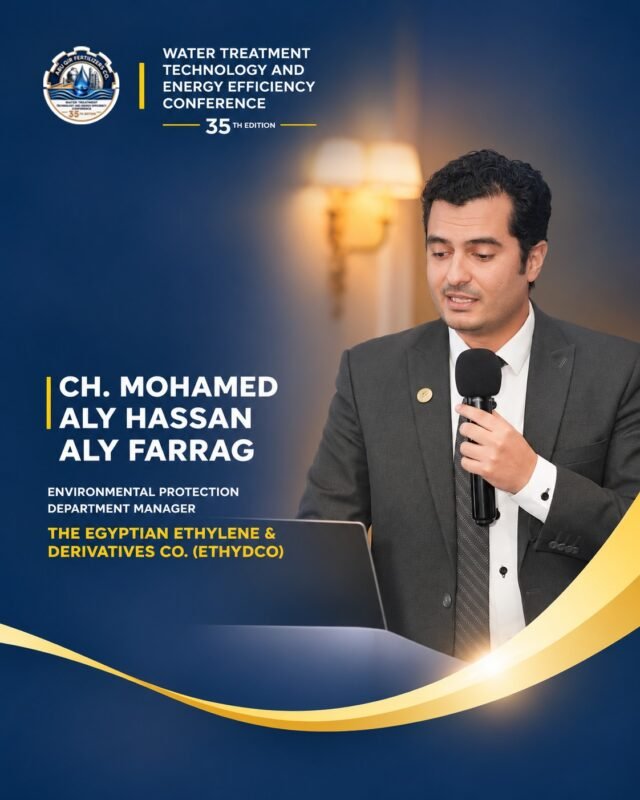
Click on the image to view more
CH. Mohamed Aly Hassan Aly Farrag
Topic:
Film-Forming Amine Treatment in Closed and Open Cooling Systems Compared with Traditional Approaches.
Abstract:
Water scarcity and water-quality degradation are increasingly important constraints to industrial sustainability in Egypt, particularly for water-intensive petrochemical operations. This study presents an updated comprehensive water footprint assessment of the Egyptian Ethylene & Derivatives Company (ETHYDCO) for the 2024 reporting year, based on the final version of the company’s 2024 Water Footprint Report. The assessment follows ISO 14046:2014 and applies a life-cycle perspective to direct and indirect water flows associated with ethylene, polyethylene, and utility operations. The system boundary includes water withdrawals, consumption, internal reuse, wastewater management, and relevant upstream contributions, with 1 kg of polyethylene produced as the declared unit.
A key feature of the assessed system is the existing Zero Liquid Discharge (ZLD) facility, which has been fully operational for several years and incorporates reverse osmosis, brine concentration, and crystallization/evaporation, resulting in water recovery and conversion of the remaining dissolved solids into solid salts. Rather than assessing ZLD as a proposed treatment solution, this study evaluates its contribution within the established industrial water-management system and identifies remaining opportunities for improving overall water and environmental performance.
Multiple water-scarcity and environmental impact characterization methods were applied, including AWARE 1.2, Ecological Scarcity 2006, Hoekstra, Pfister, and Boulay water scarcity indicators, ReCiPe 2016, and USEtox 2. The updated assessment resulted in an AWARE 1.2 impact of 0.65486 m³ world-equivalent, while the Hoekstra, Pfister, and Boulay water scarcity indicators were 0.06388, 0.02779, and 0.03071 m³, respectively. The assessment also quantified freshwater and marine eutrophication, freshwater ecotoxicity, human-health impacts, and climate change, providing a broader perspective on the environmental performance of industrial water management. Sensitivity analysis showed that a 25% increase in water consumption increased AWARE 1.2 by 16.5%, whereas a 10% increase in electricity consumption resulted in only a 0.23% change.
Overall, the results indicate relatively low environmental pressure under the applied characterization methods and demonstrate the contribution of the established ZLD system
to water recovery and the elimination of liquid wastewater discharge. At the same time, the assessment identifies direct water consumption, upstream energy and chemical supply chains, inorganic emissions, and combustion-related pathways as key areas for further improvement. The study demonstrates how water footprint and life-cycle assessment can be used not only to quantify industrial water-related environmental impacts, but also to evaluate the performance of existing water-management systems and identify opportunities for continuous improvement toward greater water efficiency, reuse, and environmental sustainability.
Keywords: Water footprint; ISO 14046; Life-cycle assessment; AWARE 1.2; Water scarcity; Zero Liquid Discharge; Industrial wastewater; Water reuse; Petrochemical industry; Water sustainability.
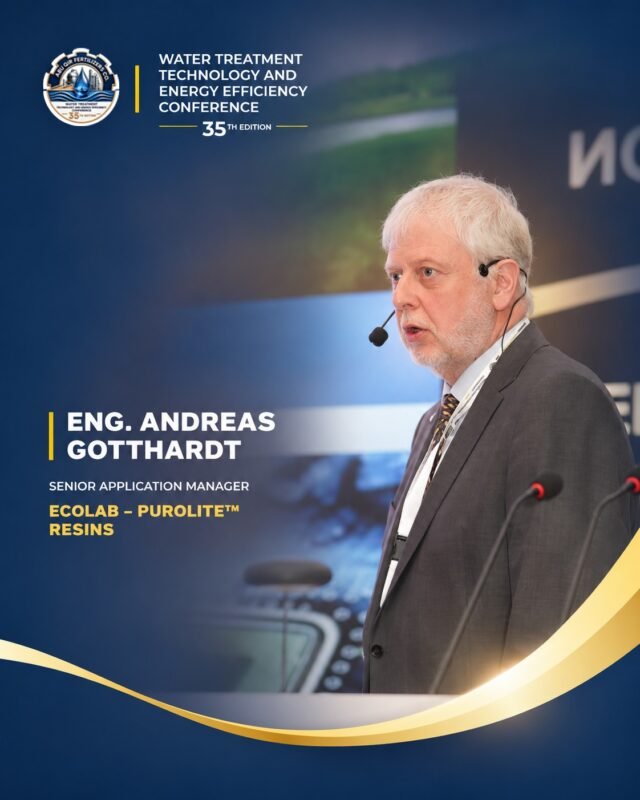
Click on the image to view more
Eng . Andreas Gotthardt
Topic:
Shallow Shell™️ Ion exchange resins.
Abstract:
Ion exchange processes are widely used for water softening, demineralization, membrane protection, and the purification of process streams. Their efficiency is strongly influenced by mass-transfer kinetics, regeneration effectiveness, and the volume of water required for rinsing. Shallow Shell Technology (SST) offers an alternative resin architecture in which the ion-exchange functionality is concentrated within a controlled outer shell surrounding an inert core. The reduced diffusion path provides faster ion-exchange and elution kinetics, while a uniform functionalized-shell depth allows the resin beads to respond consistently during service and regeneration.
This presentation reviews the operating principle and product range of SST resins and discusses their application on a few selected examples in conventional water treatment, cyclic ion exchange upstream of reverse osmosis, and chromatographic separations. Practical examples illustrate how SST can provide lower ionic leakage, reduced rinse-water requirements, more effective use of regenerant chemicals, and improved overall process economics. In a demineralization application, replacing a conventional strong-base anion resin with an SST resin reduced silica leakage and caustic consumption while increasing the average treated-water volume between regenerations. The presentation also examines the use of SST resins in cyclic ion exchange, where reverse-osmosis concentrate can serve as the regenerant. This approach can reduce purchased salt consumption and additional salt discharge while supporting higher reverse-osmosis recovery.
The reviewed applications demonstrate how resin architecture and controlled diffusion paths can improve ion-exchange performance while reducing water and chemical requirements. SST therefore provides a practical option for more resource-efficient and sustainable industrial water-treatment processes.

Click on the image to view more
Eng. Eyad Shebokshy
Topic:
ABB’s Integrated Technology Approach to Water, Energy, and Green Hydrogen
Abstract:
Industrial water treatment, energy management, and green hydrogen production depend on the coordinated control of water quality, energy use, emissions, and asset reliability. This lecture presents ABB’s integrated approach to the water–energy–hydrogen nexus, connecting measurement, electrification, motion, automation, and digital optimization within a common operational framework.
Measurement and Analytics solutions monitor flow, pressure, level, temperature, water quality, and gas composition, helping establish operating baselines and verify performance. Electrification covers power distribution, protection, power quality, and conversion for water-treatment facilities and electrolysis. High-efficiency motors and variable-speed drives, including ACQ580 and ACS880, can match pumping and aeration output to process demand.
ABB Ability System 800xA integrates process control, electrical control, power management, and safety functions within a unified operator and engineering environment. Safety functions are designed to meet project-specific independence and safety-integrity requirements. Relevant standards and frameworks may include IEC 61508 and IEC 61511 for functional safety, IEC 61850 for electrical and substation automation, IEC 62443 for industrial cybersecurity, and ISO 50001 and ISO 14001 for energy and environmental management. Applicability depends on project scope, plant design, and customer requirements.
ABB Ability OPTIMAX supports coordinated electricity and utility optimization. Applications include desalination, boiler and cooling-water systems, wastewater reuse, electrolyzer feedwater preparation, and hydrogen balance-of-plant operations. For green hydrogen projects, ABB’s enabling scope can include renewable-power integration, rectification, instrumentation, and control; electrolyzer stacks remain within specialist manufacturers’ scope.
Performance can be evaluated against documented baselines using indicators such as specific energy consumption, freshwater demand, water reuse rate, water-quality compliance, asset availability, and greenhouse-gas intensity. Technical options can then be prioritized through lifecycle-cost, payback, and sensitivity analyses that account for operating conditions and electricity carbon intensity. This framework supports phased, investment-informed modernization of water and energy systems across oil and gas, refining, chemical, and water-treatment facilities. Expected environmental and economic benefits should be validated for each site.
Click on the image to view more
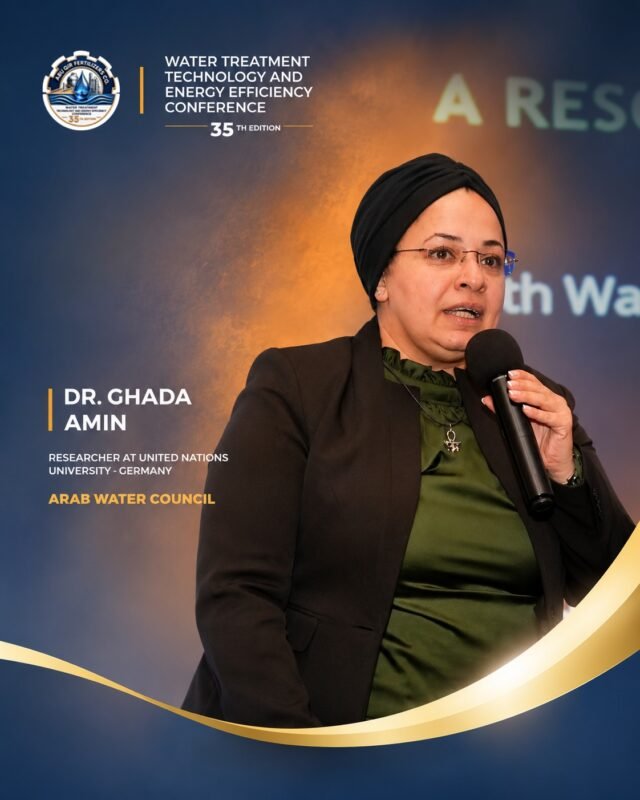
Dr.Ghada Amin
Topic:
Desalination for Green Hydrogen and the Link to Fertilizer Manufacturing
Abstract:
This presentation highlights how seawater desalination can supply green hydrogen production and how that hydrogen connects directly to ammonia and fertilizer manufacturing.
Core message: Water is not the technical bottleneck for green ammonia on Egypt’s coast. Desalination adds very little to the energy and cost of green hydrogen. What decides success is integration, brine management, siting and governance. Handled well, green hydrogen strengthens the water-energy-food nexus. Handled poorly, it adds pressure to stressed coastal ecosystems.
Click on the image to view more
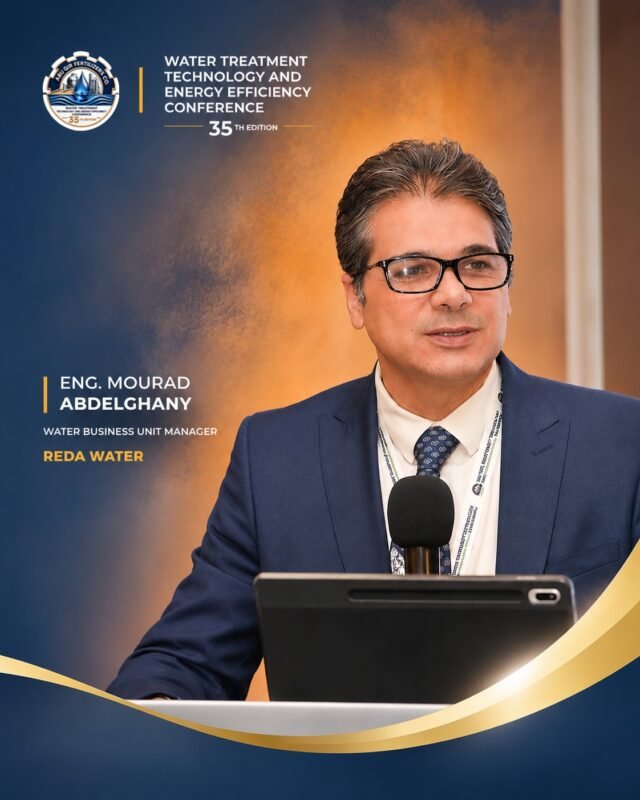
Eng. Mourad Abdelghany
Topic:
Fouling Prevention Methodology in RO Plants with High Levels of Silica, Manganese and Iron.
Abstract:
This study investigates the implementation of comprehensive fouling prevention techniques in Reverse Osmosis (RO) plants to ensure smooth and optimized operations. REDA Water successfully employed Insta-Check technology, integrated into an RO antiscalant, and daily water testing to prevent silica fouling at concentrations exceeding 200 ppm. This solution was complemented by optimized pretreatment processes specifically designed to remove high levels of manganese (Mg) and iron (Fe) present in the source underground water. The system operated for 365 days, demonstrating exceptional results including scale-free membranes and a significant reduction in Clean-In-Place (CIP) frequency, from every 7 days to every 90 days. Following the operational period, a membrane autopsy was conducted to characterize the surface and identify any impurities present.
Photo Gallery
Contact Us
CONTACT US FOR ANY QUESTIONS
Powered by GSheetConnector