
Climate Change
Climate Change
Abu Qir Fertilizers’ Commitment to Sustainability and Global Challenges
The company places the issue of climate change at the forefront of its priorities and is actively working to reduce the environmental impact of its industrial activities. Moreover, it continues to implement initiatives that contribute to global climate solutions.
Abu Qir adopts the principle of minimizing chemical consumption, ensuring operational efficiency through continuous maintenance, and recycling both waste and water — all of which represent integral pillars of the company’s sustainable production system.
Through a series of pioneering environmental projects aimed at carbon removal and recycling, the company continues to reduce its atmospheric emissions, strengthening its position as a leader in the transition toward a low-carbon economy and carbon neutrality.
EnviNOx Project for Emission Reduction
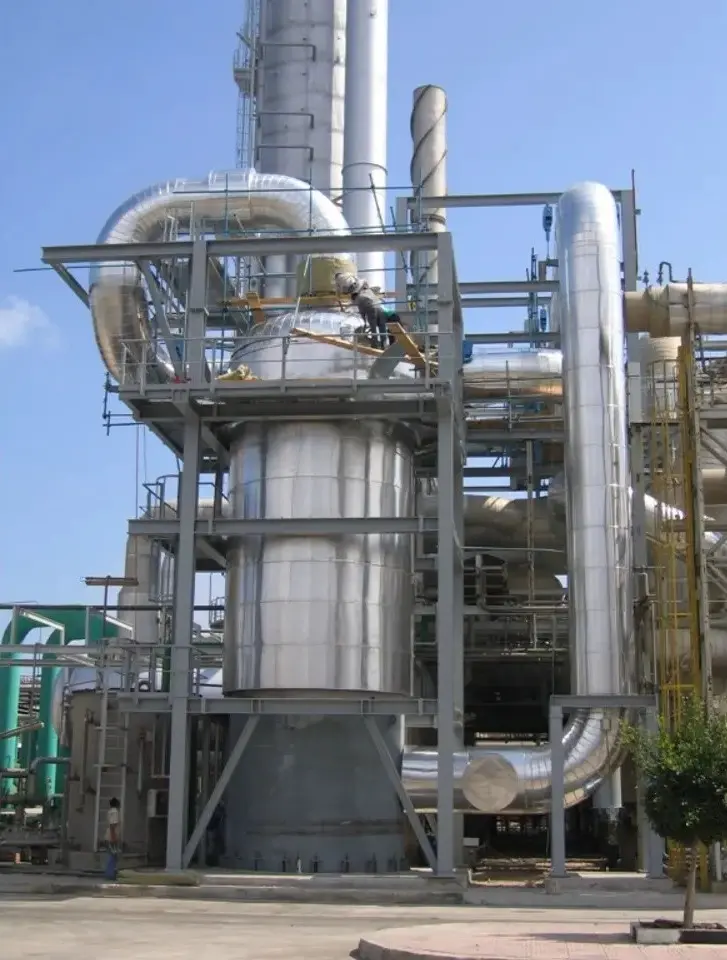
The EnviNOx Project is one of the most significant environmental initiatives undertaken by Abu Qir Fertilizers. Established in 2006 as a United Nations initiative under the Clean Development Mechanism (CDM) following the Kyoto Protocol, it is the largest project of its kind in the Middle East.
The project represents a major milestone in reducing high global warming potential gases. It converts nitrogen oxides (NOx) — which have a thermal effect equivalent to 265 times that of CO₂ — into harmless nitrogen and water vapor.
This system contributes to the reduction of over one million tons of CO₂ equivalent annually, making it one of the company’s key pillars in achieving sustainability and carbon neutrality.
Zero Liquid Discharge (ZLD) Project
Implemented in 2022, the ZLD Project aims to protect the marine environment from industrial wastewater pollution.
The project ensures that all industrial effluents are treated before discharge, with only 15% safely released into the sea in compliance with environmental regulations, while 85% of the treated water is reused within plant operations.
This initiative reduces freshwater consumption, minimizes marine pollution, and demonstrates Abu Qir’s commitment to environmental sustainability and integrated water resource management.

Solar Power Project
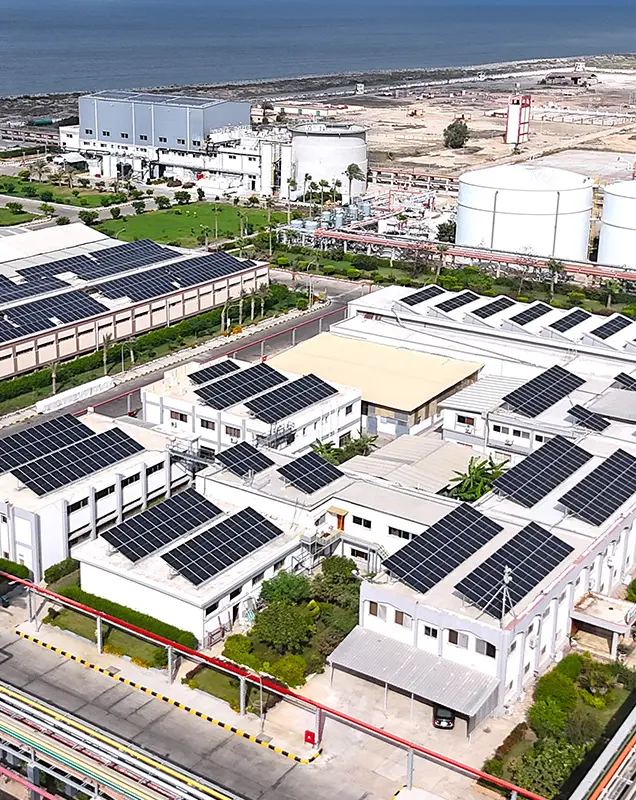
of its strategy to transition towards clean energy, reduce carbon emissions, and ensure the preservation of a clean and sustainable environment for future generations. These projects also aim to lower the carbon footprint of our products, comply with European Union requirements, and enhance reliance on renewable energy sources.
The solar energy program is being executed in three phases:
A solar photovoltaic system with a capacity of 117 kW was installed on the roof of the Social Club as a pilot phase. The system is connected to the national electricity grid, supplying clean energy to the company’s facilities.
Currently, solar panels are being installed on the rooftops of several company buildings with a total capacity of 2.65 MW as a renewable energy source for electricity. Implementation has reached 90% completion. Upon completion, Phase One is expected to generate approximately 4,500 MWh of electricity annually and reduce the carbon footprint by about 3,200 tons of CO₂ equivalent per year.
This phase involves the expansion of solar photovoltaic installations with a total capacity of 2.5–3 MW, further strengthening the company’s clean energy portfolio and contributing to sustainable electricity production.
Green Hydrogen Project (Partial Substitution of Natural Gas)
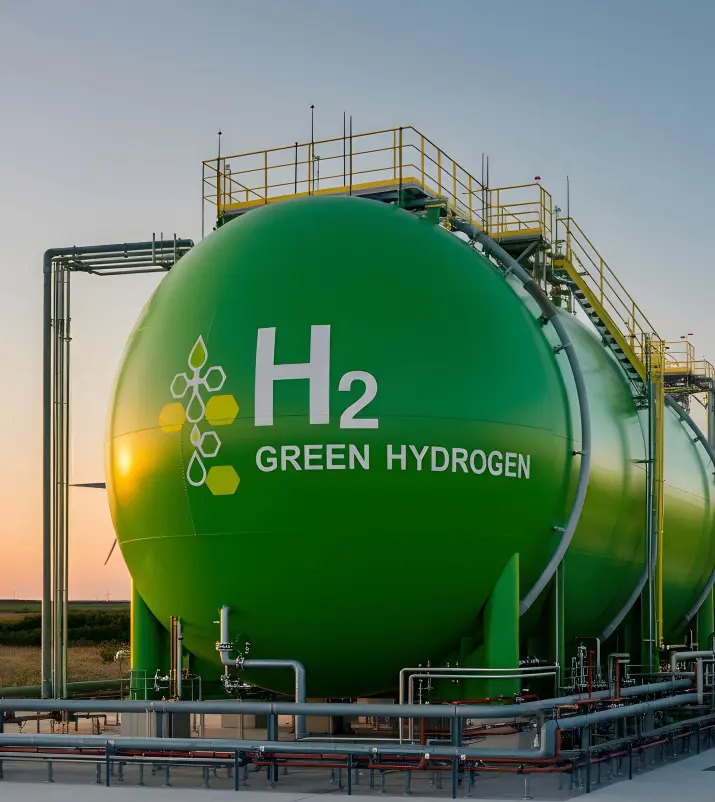
Abu Qir Fertilizers is implementing a partial substitution project for natural gas using green hydrogen, as part of its efforts to transition toward a low-carbon economy and reduce dependence on fossil fuels.
The project aims to lower the carbon footprint of urea production by integrating green hydrogen, produced from renewable energy sources, into the manufacturing process — enhancing energy efficiency and reducing gaseous emissions.
This initiative represents a strategic step toward carbon neutrality, reinforcing the company’s leadership in promoting the green economy and the application of sustainable energy concepts in the chemical industry.